Bishop Rock
An interactive lighthouse model combining physical computing with minimalist web design, allowing visitors to control light sequences, brightness, and other factors directly from a captive portal interface.
- Year
- 2025
Stack
- C
- CSS
- Figma
- JavaScript
- UI/UX Design
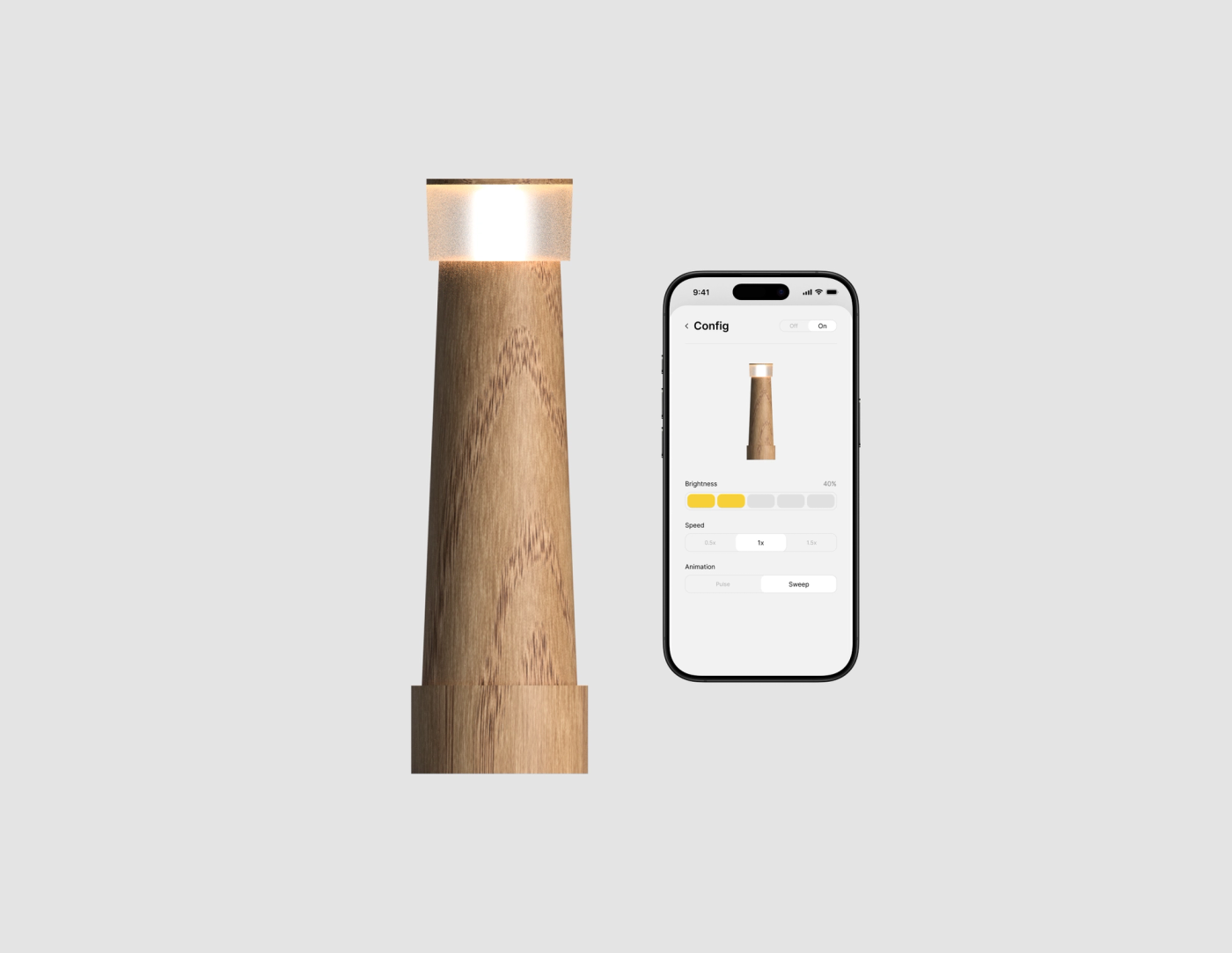
Reimagining a lighthouse signal as an interactive experience
Rather than simply reproducing the lighthouse, I wanted to capture something recognisable about it: its Fl(2) W 15s double-flash sequence. The result combines a physical model with controls for brightness, speed, and different lighting effects, letting people experiment with the signal without needing to understand the technology behind it.

Bringing precision and responsiveness through firmware and software
I was tasked with developing the firmware on Arduino/ESP8266, with precise LED sequences using FastLED. A custom state machine ensures the double-flash pattern is faithfully recreated across multiple user-controlled modes.
On the software side, I built a React-based captive portal that communicates directly with the microcontroller. Changes to brightness, speed, and effects such as sweep and pulse are reflected immediately on the model, so there's a direct connection between what you do on screen and what the lighthouse does in front of you.
Designing an interface anyone can use

The interface prioritises clarity and usability. Controls are intuitive, layouts are simple, and feedback is immediate, allowing anyone to explore the lighthouse’s signal naturally.
Extending longevity through sustainable design choices
While the physical model emphasises aesthetic and eco-conscious materials, the software and control system were designed for efficiency and reliability. By ensuring that the firmware doesn't put pressure on the hardware, this extends the product's lifespan, reduces power consumption, and limits electronic waste.